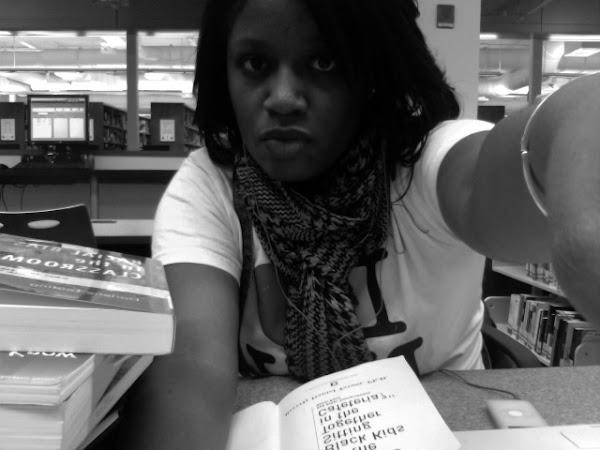
Race, Social Class, and Teaching; The Conversation Between a Black and a White Teacher.
Re’nee Wilburn
Sara D. Greenback
Internship conducted at:
Hollywood Elementary School, Hollywood, MD
Maree Garnett Faring Elementary School, Baltimore City, MD
Kanafing Upper Basic School, The Gambia, West Africa
Introduction
Currently our nation’s youth is being plagued by the achievement gap, leaving black children academically behind their white peers. This has become one of the largest social injustices for our black students, and the evidence for this gap has become well documented over time. Our research was conduced to finding a reliable way that two teachers, coming from different racial and social economic backgrounds could limit and possibly close the achievement gap. We opened a dialogue about race and social class between us while teaching at distinctively diverse schools to help us develop a more concrete idea about why the achievement gap takes place. Our rationale for investigating this social and educational inequity was our need to better prepare ourselves for teaching all of our students without biasness.
Some believe that by having more black teachers in the classroom we can begin to eliminate this biasness that limits our black students. While it can be justified to talk about the low numbers of African American teachers in the nation one notion that should be brought to attention is how important those African American teachers are in the lives of our black students. Schools systems across the nation are at a shortage of black teacher, and the amount of white teachers in the country outnumbers black teachers eminently. So the question is then raised, how effective are African American teachers, and can their pedagogy be what is needed for the success of black students? If you look at the statistics of those students who do the poorest in the country, African American students continue to score the lowest on academic achievement tests. According to Ladson-Billings (1994) children of color make up an increasing proportion of the nation’s students. They represent 30 percent of the public school populace and in the twenty largest school districts, make up over 70 percent of total enrollment. One fact is definite, minority students are less likely to be taught by teachers with strong pedagogical knowledge and this could be a contributing factor in the achievement gap. Some researchers believe that Black students need to see more teachers who look like them to raise their self-esteem and to help them know they can succeed.
Since there may be some sort of comfort established between a Black teacher and a Black student, this might have implications for students performing better in the classroom when they are being taught by teachers that share their racial identity. So are white teachers raising black students academic confidence? Many white teachers are potentially negatively effecting the education black students are receiving in their classrooms across the Unites States. This is in relation to the majority of teachers being white, and the greater part of our nations black student population being educated by them. The census bureau’s website’s tell us white teachers made up 83.2% of the teaching workforce in 2004, in comparison to 8.4% of non-Hispanic black teachers, giving white educators statistically more opportunities to influence black children’s academic livelihoods. According to the United States Department of Education, in the 2006-2007 school year, there were 8,288,264 black students, and 27,394,435 white students enrolled in our nation’s public schools, meaning millions of children are more likely to experience this ‘racial mismatching’ of black students with white teachers (Downey & Pribesh, 2004).
Methodology
Over the past year we have collected a variety of data, which includes: student work, pictures, poems, videos, journal entries, personal blog postings, observation notes, and concrete discussions that analyzed our separate experiences of race, social class, and teaching. All of this data allowed us to form our own theories on these complex issues, as well as helped us evaluate what we can all do as educators to solve this problem on a larger scale.
Our theoretical framework was based upon our discussions about race, social class and teaching. We knew we had created a special circumstance where a black and white female teacher from different social economic backgrounds, could have open discussions about race and its enactment in an educational environment. One of the advantages of our cross-raced dialogue was the comfort we had with each other, as well as in our views while we conversed our personal thoughts and feelings about race, social class, and teaching.
Our philosophical reasons for having this conversation were that we knew it was of great social importance. As a black and a white teacher working together, we had a rare opportunity to figure out how and why race plays a role in the education of our students. By having a cross-racial discussion we were able to learn from one another’s perspectives, which allowed us to understand concepts bigger than ourselves.
In Other People’s Children Lisa Delpit describes the challenge teachers face when they communicate across racial, and class lines, “One of the most difficult tasks we face as human beings is trying to communicate across our individual differences (1995)”. Our research is an example of how this seemingly ‘difficult task’ can be done. By talking about our racial and class barriers we can examine our own biasness within ourselves. This, we believe is the first step to alleviating misinterpretation.
The foundation of our dialogue was one in which we unintentionally restricted ourselves to talking solely about race, social class, and teaching. We found that we did not stray away from these topics because of our passion for each of them. The one belief we both had in common coming into this project was we both recognized how unique our circumstances were for this dialogue. Coming into the research we also differed on our beliefs about how Black and White students should be taught. Over the past year we both student-taught in Hollywood and Brooklyn, Maryland, and we co-taught in The Gambia, West Africa. We also travelled to historical slavery grounds in both The Gambia and Senegal while abroad. And although our experience with teaching and travelling were different, we experienced them together which allowed us to identify and empathize with one another beyond our research.
Findings and Interpretations
We have both come to different but relevant interpretations of the data we have collected over the past year. There were several common themes we found within our research. One common theme being us coming to understandings and misunderstandings about each other, and how the history of our race has so many implications to who we are as people. A frequent conversation would often spark about White people and how they treated Black people today. We often discussed differences between our races, the schools we taught at, and the people we encountered together throughout our research journey.
It was also through our research and these conversations that we realized our perspectives have impacted our thesis differently and thus we have come to our own findings and they are summed up separately in the two quotes below.
“No matter what type of racism exists in the classroom, it is clear that its effect is disastrous for students, and society at large. Since people are uncomfortable with the idea of their own prejudices, they often sweep them under the rug, and racism goes unaddressed for another generation. The nation’s schools have “done little to reduce racial stereotyping and racism in American society.” As a result, “racial segregation and stereotyping give rise to serious psychological and resultant learning impediments in black children” (Burke, 1990). “
-Sara
“Some people would say minority students have a distinct culture that is different from the majority and that should go into consideration while teaching those students. One fact is definite, minority students are less likely to be taught by teachers with strong pedagogical knowledge and this could be a contributing factor in the achievement gap, however, is this the problem that we need to resolve, or can the remedy simply be that more African American students need more Black teachers to alleviate the weak dimension that so widely separates them from their other peers. "
-Renee
It was through our perspectives that our misinterpretations arose. One of the big lessons we learned was we had to face various obstacles, one being those misinterpretations of our cultures. Some of these being observations and stereotypes we heard and said to one another, Black women are too angry, and White women are too weak. We found these were the racial assumptions we use to hold each other down, and keep ourselves apart. These aspects of our research made it challenging. We had to learn what to say and what not to say and what things to take personal and what things were ‘just data’. Overcoming these obstacles together strengthened our relationships with each other but often times drew us apart. In these conversations we had moments that made us uncertain about our friendship, some of our discussions made us unsure of our continuation in the research. We got deep, we took it there, we defined the odds and tested limits to what a Black person could say to a White person and vise versa. Realizations on our alternate motive helped us to remember what our goals were for this project.
Conclusion
“…at times I wondered whether mere ‘conversation’ would be enough. We seem to talk incessantly about race without achieving real change. As one of my African American colleagues said to me … ‘I’m tired about all this talk about a dialogue on race. What I want is to see the day when people quit calling me a nigger”.
- Howard R. Gary, We Can’t Teach What We Don’t Know (1999)
We have changed in the process of our engagement and our dialogue within the research process, and we’ve come to disagree with Howard Gary and his African American colleague. We have found real change within ourselves, and have found this to be the key to overcoming the negative repercussions of the past and present racial dominance. We believe we cannot diminish the achievement gap, but we can work to fix our own racial biases. We cannot begin to change our schools without first changing ourselves. We have both reflected on our personal growth and have concluded that there must be a balance of multicultural education as well.
If we as future educators did not have this dialogue we would not have as great of an understanding for cultural awareness and racial identity, and then we would be in danger of perpetuating social injustice. It has been this social injustice that has allowed the achievement gap to exist, and we believe that one of these cannot exist without the other.
We have both experienced how black students go through unnecessary struggles in school. We saw those facets of the school system that were failing them including White teachers, who did not reach out to black culture for understanding. We’ve seen teachers from different races can work together, with our co-teaching as an example, which helped us understand our strengths and weaknesses in the classroom.
We now know that the interaction between black and white teachers is about celebrating our differences and understanding that all students have diverse cultures and should be educated distinctively, which then leads to a better learning system. Black and white kids need to see black and white educators come together and agree about something as serious as education. Both black and white students are at a disadvantage socially when they are not exposed to different people and other cultures.
Citations
Burke, Fred G. (1990). Public education: Who's in charge?. New York, NY:
Praeger.
Delpit, L. (1995). Other people's children: Cultural conflict in the classroom.
New York, NY: The New Press.
Howard, G.R. (1999). We can't teach what we don't know. New York, NY:
Teachers College Press.
Noguera, P.A. (2008). The trouble with black boys;…and other
reflections on race, equity, and the future of public education. San Francisco, CA: Jossey-Bass.
Weis, L., & Fine, M. (2005). Beyond Silenced Voices.NY: SUNY Press.